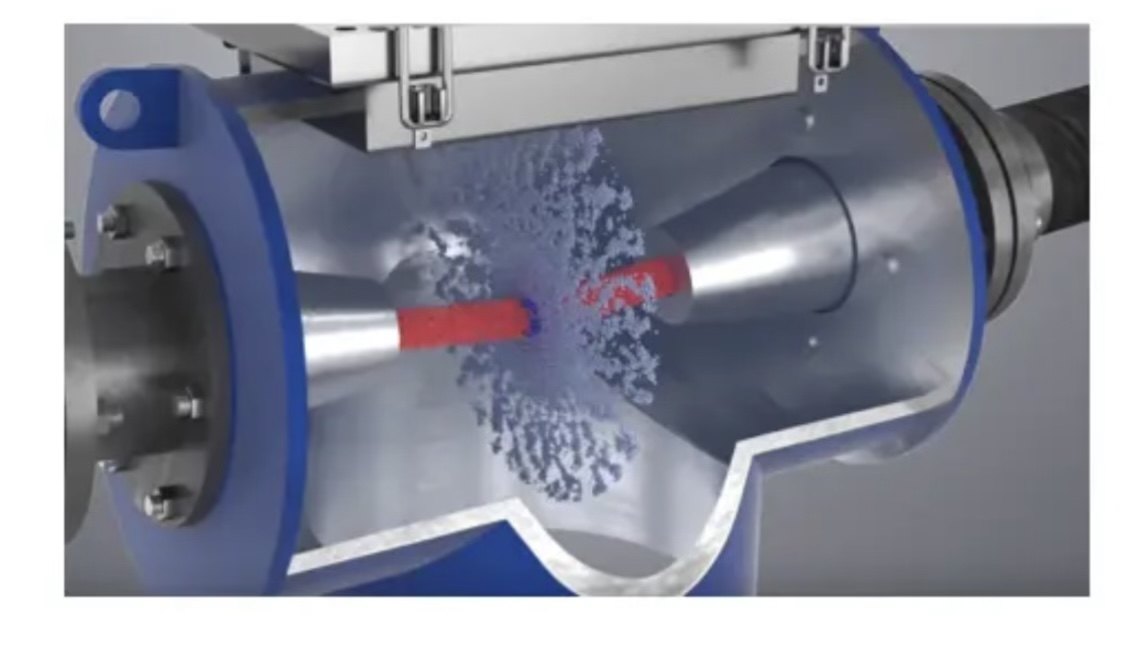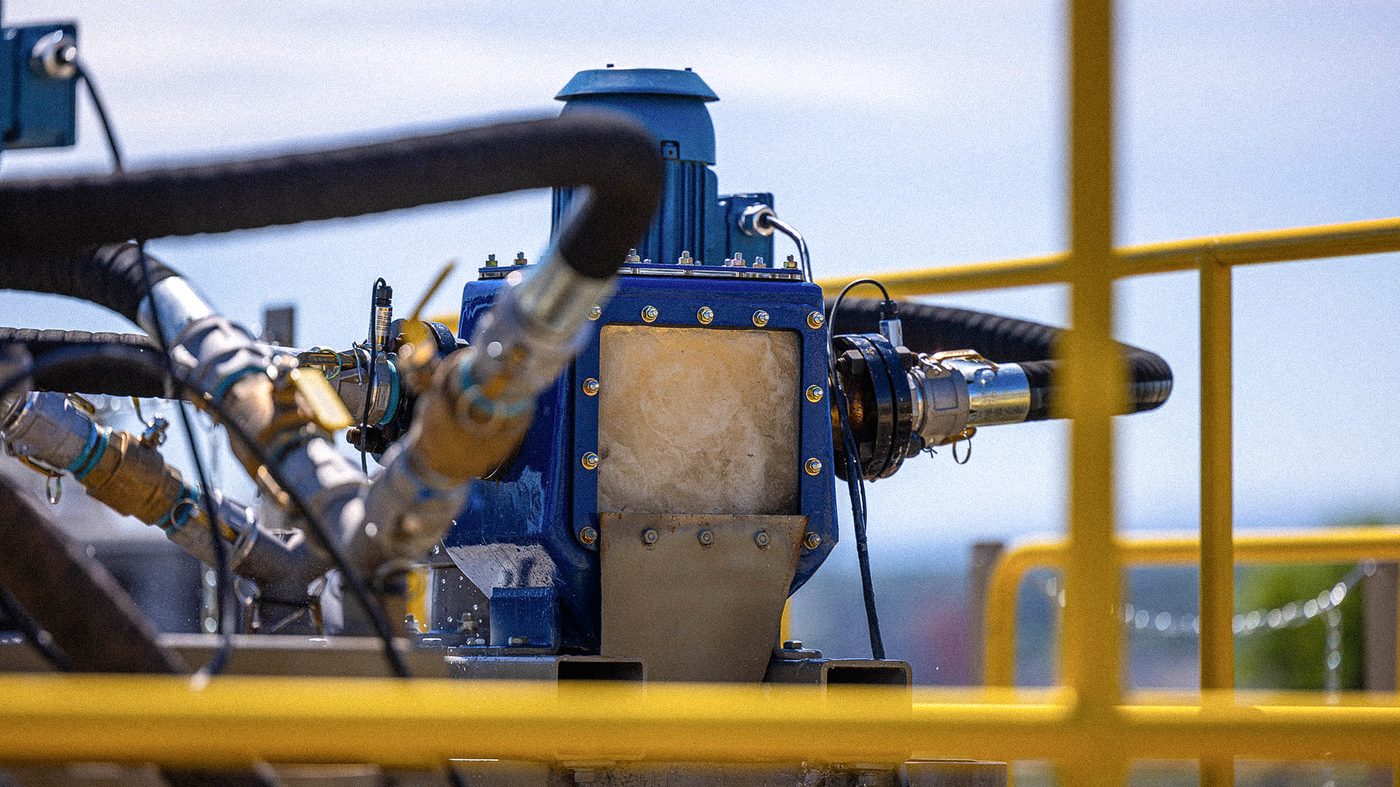
HPSA applies comminution energy where it creates value — targeting mineral liberation instead of indiscriminate size reduction. A 100% mechanical process, with no grinding media and no chemical reagents.
HPSA directs opposing high-velocity slurry jets to create particle-on-particle impacts. Ore fractures along its natural grain boundaries and hardness differentials, releasing target minerals from the surrounding gangue — early, and at coarser grind sizes than conventional milling allows.
The same collision-based process does two physically distinct jobs, depending on the material and the goal. An operation may need one, the other, or both.
Breaks composite particles apart along their natural grain boundaries and hardness differentials, freeing the valuable mineral from the gangue it's locked to — at coarser grind sizes, with fewer fines.
Drives recovery & grade — feeds flotation, regrind circuits and scavenger streams.
Strips coatings, films and contaminants from particle surfaces without reducing particle size — cleaning the material rather than breaking it down.
Drives product cleaning & media regeneration — preserves flake and grain size where that matters.
Both modes come from the same mechanism — controlled particle-to-particle collision — which is why a single HPSA unit can be configured for liberation, cleaning, or a combination, according to what the ore and the circuit need.
Conventional milling drives ore ever finer to expose mineral grains. HPSA achieves liberation within a coarser working window — concentrating effort on releasing the target mineral rather than reducing particle size for its own sake.
Indicative comparative size-reduction ranges across milling technologies, after DISA Technologies. HPSA liberates within a coarser working window, reducing the need for fine grinding downstream.
HPSA's advantages are framed where they matter to plant economics — the recovery, throughput and unit cost of the valuable mineral you produce.
Improved liberation lifts concentrate grade and recovery together across sulfides, oxides and industrial minerals — more target mineral reporting to product.
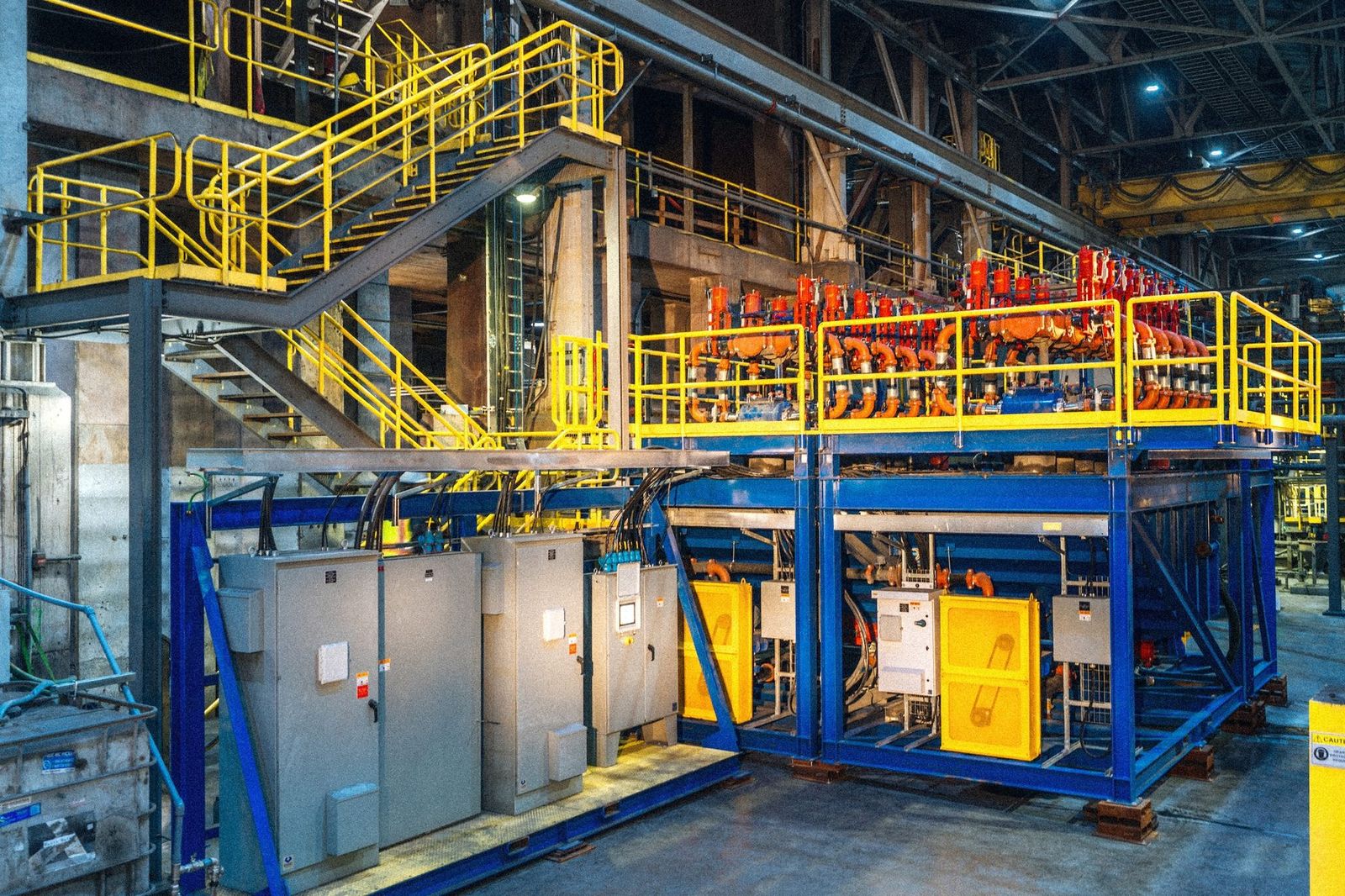
More metal per tonne of oreSkid-mounted modules integrate into new or existing circuits in weeks, raising the volume of saleable product handled across the same plant and overhead.
More output, same footprintRising recovery and quality spread plant cost across more saleable product, reducing the all-in cost to produce each tonne of valuable mineral.
Cost per tonne of productA single modular family scales from field-pilot units through full-capacity production. Final unit selection depends on your material characteristics and testing performance.
| Unit type* | C-1 | C-2 | C-10 | C-25 | C-50 | C-125 | C-250 | C-500 |
|---|---|---|---|---|---|---|---|---|
| Capacity up to (MTPH) | 1 | 2 | 10 | 25 | 50 | 125 | 250 | 500 |
| % Solids | 45 | 45 | 45 | 45 | 45 | 45 | 45 | 45 |
| Installed power (kW) | 15 | 30 | 75 | 160 | 300 | 800 | 1500 | 3000 |
| Length (m) | 2.4 | 2.4 | 6.9 | 6.1 | 7.6 | 10.7 | 10.7 | 12.2 |
| Width (m) | 1.2 | 1.2 | 2.4 | 2.7 | 2.7 | 4.6 | 9.1 | 9.1 |
| Height (m) | 2.1 | 2.4 | 4.6 | 4.6 | 6.7 | 7.4 | 7.6 | 7.6 |
| Total weight (t) | 1.8 | 2.7 | 10.4 | 13.6 | 20.4 | 27.2 | 45.4 | 68.0 |
*Selected unit depends on individual material characteristics and testing performance. Sizing data per DISA Technologies.
HPSA can be deployed at almost any point in the circuit to improve liberation or recover lost value. Its modular design minimises shutdown requirements and integrates with mill automation systems.
Works alongside or in place of ball, rod and tower mills and attrition scrubbers, applying liberation energy more selectively.
Inserted ahead of or between beneficiation stages to lift the recoverable fraction reporting to separation.
Re-liberates value from middlings and tailings streams, unlocking saleable mineral from material previously considered waste.
Deployable where footprint and installation windows are limited — skid-mounted, with short installation timelines.
A European laboratory partnership for regional testing is in progress. Until then, characterisation and pilot programmes are coordinated through DISA's established facilities.
High-Pressure Slurry Ablation is the patented technology of DISA Technologies Inc. Optimise Minerals is its appointed agent for EMEA & Central Asia. For the full technical detail, performance data and case studies, visit the developer's site.

The fastest way to understand the value is a characterisation and pilot programme on your own material. Let's scope one.
Contact Optimise Minerals